|
Everyone would like to
keep live plants. When provided with a
few consistent basics, many types of plants are easy to keep
and will do very well with minimum care. The
water
that comes from the tap must give you a fair start. Generally,
softer
water and a neutral to slightly acid pH is best for
plants. See Plant Species for
more information on identification and
care of the specific types of plants that I have found
to be easy and functionally best for the fish kept here.
Primarily standard cool white or houseplant designed
Compact flourescent
light bulbs are used,
on for about 10-14 hours a day.
With the occasional 4' shop light hood, I will use 1CW
and 1WW (warm white) bulb per fixture. Plants respond to
water changes
(Plants DO NOT do better in dirty water, as intuitive
as it may seem they would), and air driven
box filters provide aeration.
over
the last few years, 4 foot
light hoods are being discontinued, and when considering
initial expense, cost to run and longevity,
CFL bulbs are used here, and the "daylight" type have been found
to do an excellent job at growing plants. Due to expense and
other issues, we do not use LED lights here on any of the
tanks. I understand that many fishkeepers swear by them.
I understand that a number of issues have arisen over time that
have, for the time being, convinced
me that LEDs are not yet
ready for the type of lighting
this fishroom requires.
After years of experimenting to find which
plants grew best in the
water available from the tap, about a dozen species are
used,
with little desire to explore any further as the plants
are currently very functional and are at maximum density most of
the time.
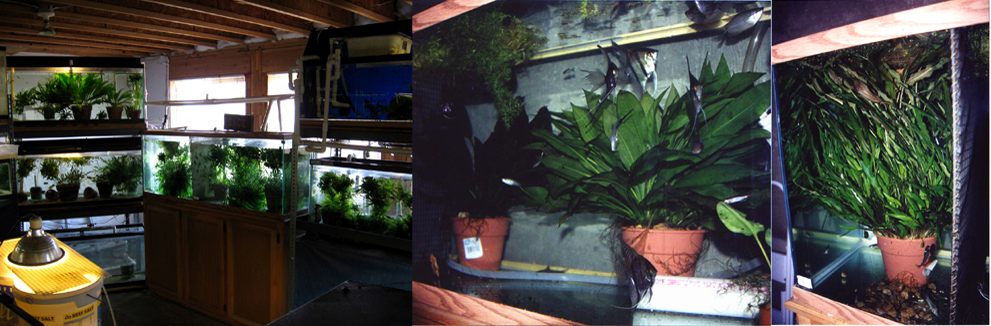
Potted plants are kept in 4" to 6" clay pots filled
with soaked peat, with a layer of
gravel or sand over the top
to prevent the
soil from fouling the aquarium. The tanks themselves
are all bare bottom. The
potted plants include various Amazon Swords,
Crypts, Sagittaria, Vallisneria, and Anubias,
and the soil needs to be changed about once a year or it will
contribute to
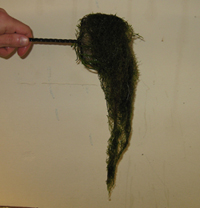
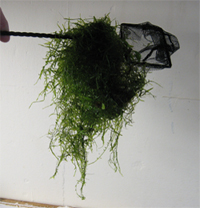
unhealthy conditions in the tank. Floating plants
include Java fern, Java moss, Bolbitis fern and Water
Sprite. Various
species of Duckweed are removed to keep it from
blocking light into
the aquariums, and used as
infusoria starter or
food for others in the fishroom.
The tanks maintain a natural, wild, but clean look. You may
choose to save your excess
Duckweed- dry it out, and use it as an excellent
culture source for raising infusoria (microorganisms for newly
hatched
egg layer fry). Do
not disparage Duckweed as it represents much that has
been removed from the aquarium over the
course of its growth to help keep the fish healthy.
Back to Previous Tip
To Next Tip |
 |