|
Understood
to have been the scourge of winemakers for millennia, vinegar
eels are not an eel at all,
but a very small
nematode that will grow by the hundreds of thousands with almost
no care. They are
ideal for any
fry in
the first few weeks of life. I feed them to all
egg layer fry,
such as the
Puntius padamya
until the fry are
large enough for brine shrimp.
Kept by
many hobbyists and offered from this site, they can be
maintained in any type of bottle or jar of
about 2 quarts or more. Once you have obtained a culture, fill
your intended container with half regular
apple vinegar and half distilled water, starting the culture off
as cleanly as possible. Into that, drop 6-8
slices of raw apple. Add your new culture.
Store on a shelf out of direct light at room temperature, and
that culture will last 4-6 months with no further
attention than to add vinegar and water when it
evaporates. As the container fills with eels the water will
appear cloudy. The population will regulate itself if
you don't feed from it. Provide some access to air
through holes drilled into a loose fitting top. Storing them
without a top on the container is a great way to
catch flies, which will foul the mix. Simply start a new
culture in a new vinegar water mix with new apple
slices. When it begins to "go bad,"- the apple pieces on the
bottom of the cultures begin to break down-
I generally start fresh cultures and clean out the old
containers, about every 5 or 6 months. The cultures
don't smell, and when not being used are fine being ignored
until they are needed.
Though they are not fed other than from the bacteria that
digest the apple slices, they are a surprisingly
nutritious food for young
egg layer fry, and when compared to
the culture of microworms or paramecium
(Other foods that also serve this purpose), I find the
vinegar eels to be far more convenient and dependable.
However, though the eels do reproduce rapidly, I keep a
number of 2 liter bottles going to meet my needs.
I find that it takes about 5 days for eels to repopulate a
bottle enough to provide a fair feeding, and when
feeding a 40 gallon breeder tank of 300
odessa fry for the
first week of their life, I will feed from 3 two liter
bottles per feeding, and do that 3 times per day. (Each
feeding followed by a 50% water change- see
Breeding
Odessa Barbs) To maintain enough culture so that each bottle
has 4-5 days to recover between feedings, I
maintain about 30 2 liter bottles, which takes a fair amount
of space. Because I raise batches of
fry frequently,
about every 5 months I will
redo all of the vinegar eel cultures, using about a quarter of each bottle to seed the
next batch, then setting up the new cultures with fresh
vinegar, water and apple slices. I then give them about
2 weeks before feeding from them again.
I have found two ways to feed them to the fish that work. You
can filter them through a coffee filter by pushing
a filter into a small rounded plastic container with the
bottom cut out (See
Video). Sit that over another
receptacle and pour the vinegar mix through it, then rinse
the vinegar eels off the filter into another container
holding clean water, then feed with a turkey baster. The
other way is to run an electrical tie through 1/2" wide
green scrubby pad strips (The kind bought at any grocery
store that we all use to wipe algea off glass), and
leave them hanging in the vinegar mix. When you need to feed,
simply shake the strips in some fresh water
and feed as before, hanging the scrubby strips back in the
vinegar mix when done. The eels populate the
surface area of the strips and come off easily when shaken in
the fresh water. To save on shipping, combine
with an order of fish for no extra shipping charge. Below is
a pic of how I keep my vinegar eels:
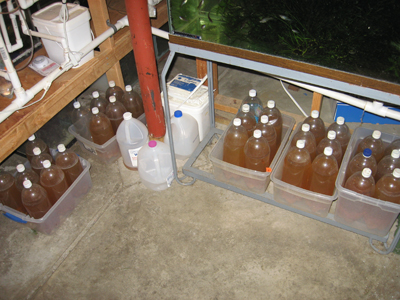
The Vinegar Eels, ready to be used.
Back to Previous Tips
To Next Tip
Home
Contact Us
Receiving Shipped Fish
Keeping Select Aquatics Fish
|
 |